

Shandong Good Achievement | The world's first ultrasound driven piezoelectric micro nano patch has been launched, ushering in a new era of "wireless" neural repair
A joint research achievement from the National Key Laboratory of Crystal Materials at Shandong University and Qilu Hospital has brought a new dawn to millions of traumatic brain injury patients worldwide. In May 2025, the research team successfully developed the world's first wireless piezoelectric micro nano patch, which can achieve precise electrical stimulation of implanted stem cells through ultrasonic driving, without the need for electrode implantation and avoiding secondary damage, marking a new stage of "precise non-invasive" neural repair therapy.
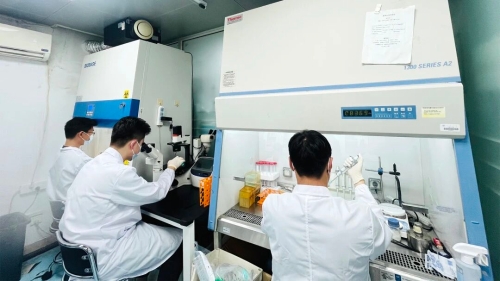
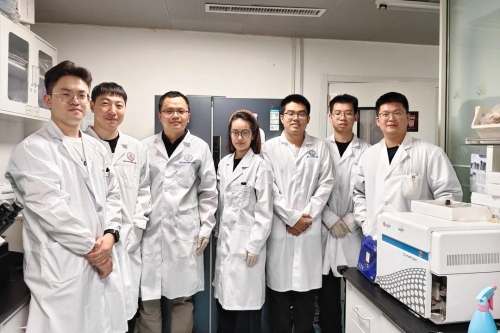
Cracking the curse of 'non renewable neurons' Every year, 50 to 60 million people worldwide suffer from traumatic brain injury, causing many patients to lose their motor or cognitive function, and even endangering their lives. Once neurons are damaged, they are extremely difficult to repair on their own, and traditional medical methods are often powerless. Although implanting neural stem cells and inducing their differentiation into neurons through electrical stimulation is considered an effective way to reconstruct neural networks, clinical promotion has always faced significant obstacles. The traditional electrode stimulation method requires surgical implantation of electrodes, which is highly invasive, prone to infection, and has low stimulation efficiency, making it difficult to accurately target dynamically migrating cells, "said Qiu Jichuan, a professor at the Institute of Crystal Materials at Shandong University. This is precisely the core bottleneck of current clinical treatment for nerve injury repair. In this context, the Liu Hong/Qiu Jichuan research group from Shandong University's Institute of Crystal Materials, in collaboration with Qilu Hospital, has formed a research and development team that integrates multiple disciplines such as materials, medicine, biology, and microfabrication, relying on the school's "Interdisciplinary Mentor Innovation Team Plan", to tackle this global challenge. When ultrasound becomes a 'cell charger' The answer sheet submitted by the team is a "barium titanate reduced graphene oxide composite piezoelectric micro nano patch" as thin as a cicada's wing. How does it work? The mystery lies in the "piezoelectric effect" - when a material is deformed by external forces, an electric charge is generated inside it. The team cleverly utilized this principle to design the patch as a miniature "energy converter" that can stably adsorb onto the surface of neural stem cell membranes. During treatment, only minimally invasive injection is needed to implant the stem cells adhered to the patch into the damaged area, "explained Qiu Jichuan. Afterwards, patients only need to use common medical ultrasound therapy equipment to apply ultrasound waves from outside the body. The sound waves penetrate the tissue and drive the patch to generate tiny piezoelectric potentials, thereby accurately activating voltage-gated calcium ion channels on the cell membrane and inducing stem cell differentiation into neurons. During this process, barium titanate nanoparticles serve as the core piezoelectric material, responsible for generating electrical signals in response to ultrasound; Reduced graphene oxide nanosheets serve as carriers to firmly anchor barium titanate onto the surface of the cell membrane, preventing it from entering the interior of the cell and causing damage. The entire process, except for the initial injection, is completely non-invasive, completely free from the cable constraints and implantation trauma of traditional electrodes. Brain neural network achieves' wireless restart ' The effectiveness of the technology has been excitingly validated in animal experiments. The research team conducted systematic testing on a rat model of traumatic brain injury. After surgery, rats receiving stem cell transplantation with piezoelectric patches were subjected to ultrasound stimulation every two days (1 megahertz, 5 minutes each time). 28 days later, the results were revealed: through immunofluorescence technology tracking observation, about 60% of implanted stem cells successfully differentiated into neurons, which was nearly three times more efficient than implanting only ordinary neural stem cells. Even more encouraging is that the motor and cognitive functions of these rats have been significantly restored, and the damaged neural networks have been effectively repaired. Behind the data lies the support of precise targeted stimulation technology, "said Qiu Jichuan. Due to the close proximity of the patch to cell movement, electrical stimulation can accurately target cells, avoiding the problems of energy dispersion and low efficiency of traditional electrodes. Meanwhile, the non-invasive ultrasound driving method greatly enhances the safety and acceptance of treatment. Team members are studying the interaction between piezoelectric patches and cells The infinite future of 'wireless' therapy The value of this achievement goes far beyond traumatic brain injury. The research team believes that this technology platform also has great potential for applications in neurodegenerative diseases such as Alzheimer's disease and Parkinson's disease, as well as spinal cord injuries. Its core advantage lies in the integration of minimally invasive implantation, wireless driving, and precise stimulation. When it comes to industrialization, Qiu Jichuan said that it is still in the early stage of research and looks forward to collaborating with enterprises to promote technological optimization and clinical trials in the future. But the research team is confident in the market prospects of this achievement: "Traditional electrical stimulation devices are bulky and require professional operation, and implanted electrodes pose risks of infection and secondary surgery. Our technology makes ultrasound devices household, easy to operate, and can greatly reduce patients' time and economic costs, while reducing the burden on the public health system," said Qiu Jichuan. The research team is in the laboratory Looking ahead to the future, the team's research pace has not stopped. They are committed to tackling the batch preparation technology of biodegradable high-performance piezoelectric materials and exploring the combination with advanced technologies such as focused ultrasound. In the longer term, by regulating the interaction between patches and cells, this technology is expected to be extended to other types of cell therapy and tissue repair, achieving synergistic treatment of complex diseases with multiple cells. This cross-border innovation led by the research team of Shandong University has significantly enhanced China's international competitiveness in the fields of biomaterials and regenerative medicine, marking another major breakthrough in China's technological frontier of "precision medicine" and "non-invasive treatment".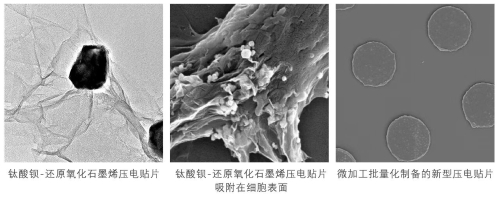
Information source: Shandong Provincial Department of Science and Technology (official website)




