

Shandong Good Achievement | 0.007mm Electronic Device 'Invisible Armor' Achieves Mass Production! Domestic ultra-thin conductive non-woven fabric breaks international monopoly
With the rapid development of cutting-edge electronic industries such as 5G communication, smart wearables, and flexible displays, the highly integrated internal components of devices have put forward an urgent demand for electromagnetic shielding materials that are "ultra-thin," "flexible," and "high-performance. In May 2025, China's first ultra-thin conductive non-woven fabric with a thickness of only 0.007 millimeters achieved large-scale production, with a total output exceeding 1 million square meters, marking a significant breakthrough in the field of high-end electromagnetic shielding materials in China. This achievement, independently developed by Shandong Tianhou New Material Technology Co., Ltd., has completely changed the long-term dependence on imported high-end ultra-thin conductive non-woven fabrics in China. It is reported that this material has been widely used in high-end electronic devices of many enterprises in China, providing key material support for the development of China's cutting-edge electronic industry.
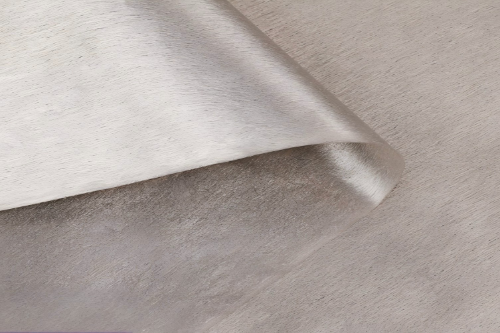
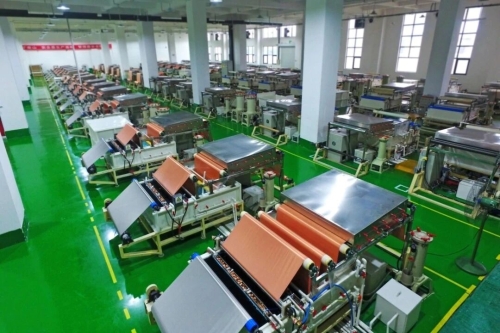
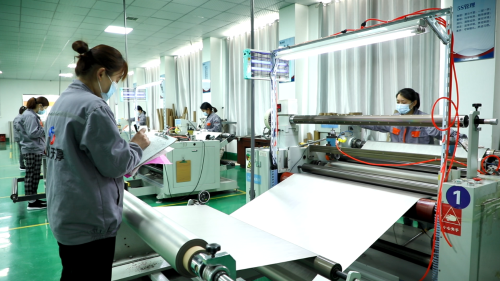
Ultra thin conductive non-woven fabric with a thickness of only 0.007 millimeters Breaking the monopoly and achieving independent and controllable core technologies Conductive non-woven fabric, as a high-performance electromagnetic shielding material, is known as the "invisible armor" of electronic devices. Although its thickness is only a few tens of micrometers, it has both conductivity and electromagnetic shielding functions, and is widely used in cutting-edge fields such as 5G communication, smart wearables, and intelligent driving. For a long time, the global high-end ultra-thin conductive non-woven fabric market has been controlled by international giants such as the United States and Japan. Domestic related industries not only face supply constraints and high prices, but also face significant risks of being "cut off". Ultra thin conductive non-woven fabric with a thickness of only 0.007 millimeters We have seen this severe industry pain point and are determined to develop ultra-thin conductive non-woven fabrics with independent intellectual property rights and performance that meets or even exceeds international standards, in order to meet the urgent demand for high-end electromagnetic shielding materials in the domestic industry chain, "said Li Qiang, Deputy General Manager of Shandong Tianhou New Material Technology Co., Ltd. At that time, the core process and complete equipment technology for vacuum coating with ultra-thin and uniform conductive coatings below 0.02 millimeters were in the hands of foreign enterprises, and there was a lack of relevant experience in China. How to achieve electromagnetic shielding effectiveness of up to 99.9999% while ensuring extreme thinness, and ensure that performance does not degrade under repeated bending, is also a huge technical challenge. Faced with this severe challenge, Shandong Tianhou New Materials Technology Co., Ltd. has formed a research and development team with universities such as Shandong University, achieving rapid transformation from theoretical innovation to technological breakthroughs and industrial applications. Conductive non-woven fabric production workshop Li Qiang introduced that the key to achieving breakthroughs lies in conquering the core process of "vacuum coating". The requirements for this process are extremely high. At the micro level, it is necessary to achieve the ultimate uniform deposition of nanoscale metal conductive layers on soft and porous non-woven fabric surfaces, as any slight deviation can lead to performance failure. It is necessary to ensure that the metal layer is firmly bonded to the non-woven substrate, while also ensuring that the overall material can withstand hundreds of thousands of bends without falling off or breaking. The process parameter window is extremely narrow, and hundreds of parameters such as vacuum degree, temperature, and deposition rate need to be accurately matched and controlled. Finding the optimal solution is like searching for a needle in a haystack. The biggest challenge is to resolve the contradiction between "ultra-thin" and "high reliability". The thinner the material, the poorer its mechanical strength and durability. We have overcome this challenge through integrated innovation of materials, structures, and processes. Firstly, we have independently developed a special non-woven fabric substrate. Secondly, we have designed a multi-layer composite structure to form a gradient transition between the conductive layer and the functional layer. Finally, we have undergone hundreds of iterations of vacuum coating equipment, and finally found the 'golden process point' to achieve ultra-thin, strong, and high conductivity, "said Li Qiang. Authoritative test data shows that in the medium to high frequency range, the electromagnetic wave blocking rate of this achievement reaches 99.9999%, which is equivalent to the shielding effectiveness of ordinary concrete with a thickness of 75cm; After withstanding 300000 bending cycles, the shielding effectiveness of the material remains above 90%, and its main performance has reached the international advanced level. This also marks a leap from "following" to "leading" in China's high-end electromagnetic shielding materials. The staff is conducting quality inspection on conductive non-woven fabric products Strong chain, domestic materials embedded in global vision Technological breakthroughs are just the first step, transforming laboratory results into stable and reliable mass-produced products is another challenge. The R&D team went through three key stages and ultimately achieved the transformation from samples to products. In the stage of engineering amplification, the R&D team started with small experimental machines and gradually built and improved pilot production lines, focusing on solving the problems of process stability and product consistency; After entering the yield ramp up stage, the team established a full process quality control system and successfully overcame a series of engineering challenges such as defect control and tension control in roll to roll production during mass production, steadily improving product yield to a commercially applicable level; In the final stage of capacity expansion, the team completed the design and debugging of the first fully automated production line, achieving stable and efficient large-scale production, and ultimately achieving a breakthrough of 1 million square meters. At present, the annual production capacity of this product has reached 10 million square meters, with an annual output value of over 200 million yuan, and a domestic market share of 40%, firmly ranking first in the industry. What is even more exciting is that this "Made in Shandong" high-end material has successfully entered the supply chain system of many well-known enterprises in China, and is widely used in high-end smartphones, tablets, foldable devices, AR/VR glasses, laptops and other products. Li Qiang introduced that in these high-end electronic devices, this material is mainly used as the electromagnetic shielding layer for flexible printed circuit boards (FPC) and printed circuit boards (PCB), as well as the shielding layer for camera modules and other key parts, providing reliable electromagnetic protection for the stable operation of the equipment. The customer particularly recognizes that our ultra-thin design has released valuable space for the internal structure of the device, and our excellent flexibility perfectly adapts to the needs of emerging forms such as foldable screens, "said Li Qiang. Promote innovation, aim for international leadership in industrial layout The successful mass production of this ultra-thin conductive non-woven fabric has significance beyond just a breakthrough in one product. It has actually filled a key gap in China's high-end electronic information materials field, enabling domestic high-end electronic whole machine enterprises to achieve independent and controllable control in key raw materials, greatly enhancing the security and resilience of China's electronic information industry supply chain. The R&D team also positions itself as the "goalkeeper" in the industry chain. Our responsibility is to build a strong defense line in the field of key materials through continuous technological innovation, and contribute industrial strength to the country's scientific and technological self-reliance, "said Li Qiang. The successful implementation of this project has also generated significant economic and social benefits. In the upstream of the industry, the project has driven the development of related industries such as special fibers, vacuum equipment manufacturing, and high-purity target materials, forming a good industrial chain synergy effect. In terms of employment, the project has directly created hundreds of high-tech jobs and indirectly driven thousands of job opportunities upstream and downstream, injecting new vitality into local economic development. It is worth mentioning that through cooperation with local universities in Shandong, an internship and training base has been established to cultivate a group of engineers and technical workers in the field of new materials with both theoretical and practical abilities, which has reserved talents for the upgrading of local industries. Looking towards the future, the R&D team has drawn a clear development blueprint. It is expected that in the next three years, the related products can achieve an annual production capacity of 40 million square meters and an annual output value of 1 billion yuan. To achieve this goal, the team will focus on promoting the construction of new intelligent factories, adding several fully automated production lines, and introducing the industrial Internet platform to realize the digital management of the whole production process, so as to further reduce costs, improve efficiency and quality consistency with the scale effect and intelligent manufacturing. At the technical level, the innovation pace of the R&D team has not stopped. Li Qiang stated that the research and development of the next generation of products with a thickness of less than 0.005 millimeters has been initiated, and the team is also exploring intelligent electromagnetic shielding materials with integrated functions such as thermal conductivity and sensing to meet the more complex needs of future electronic devices. In terms of internationalization strategy, the team has also clarified its development path. Our initial target area is a gathering place for high-end electronic manufacturing industries such as South Korea and Europe. With the dual advantages of performance and cost, we will compete with international giants on the same stage. Our goal is to become an important supplier of high-end electromagnetic shielding materials worldwide, allowing 'Shandong made' high-end new materials to occupy an important position in the global market, "said Li Qiang. The mass production of 0.007mm conductive non-woven fabric not only breaks the technological monopoly of foreign countries, but also demonstrates China's innovative strength in the field of new materials. With the increase of production capacity and technological iteration, this "Made in Shandong" achievement will continue to promote the development of China's electronic information materials industry and demonstrate a new height of China's intelligent manufacturing in the global high-end manufacturing field.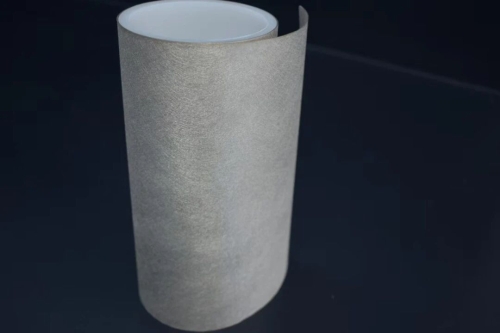
Information source: Shandong Provincial Department of Science and Technology (official website)




