

When it comes to automatic wire laying machines, you should know how important they are for aircraft curved parts
This is not a machine for textiles! But it is a powerful tool to enhance the core competitiveness of industry, with significant strategic value in fields such as aerospace, automotive, high-speed rail, wind power, and shipbuilding.
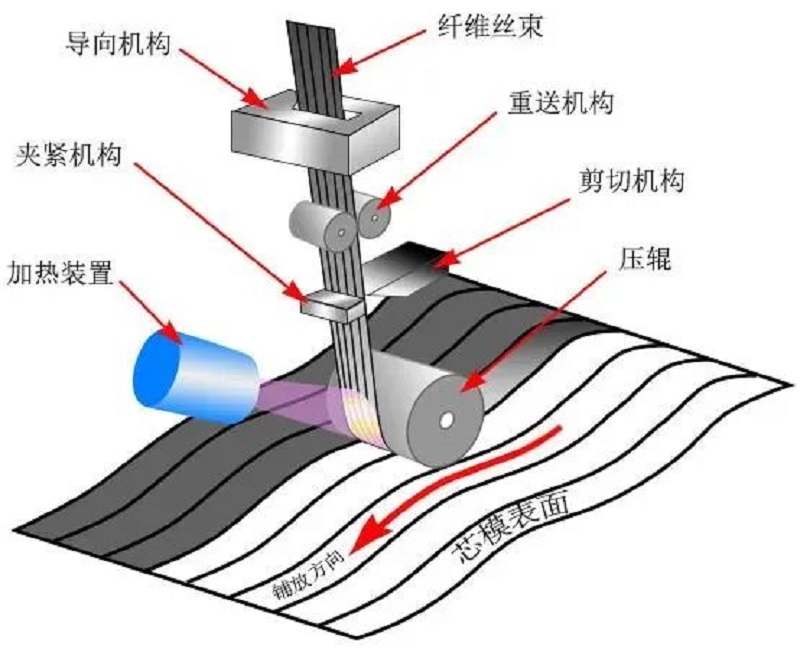
Automatic fiber laying technology refers to the automatic laying of multiple pre impregnated fiber bundles under the control of a multi coordinate automatic fiber laying machine. The fiber laying head bundles the bundles into strips through functions such as unwinding, guiding, conveying, pressing, cutting, and rolling under the pressure roller, and automatically lays the layers according to the trajectory planned by the computer.
After understanding this technology from a scientific perspective, we still have some doubts about why it is so important? Today, taking aircraft manufacturing as an example, let's learn about this important technology that started from scratch.
Firstly, we need to understand what exactly the "silk" being laid is? In fact, these threads are carbon fiber composite materials used to cover the fuselage and wings during aircraft manufacturing.

This composite material has a series of advantages compared to other materials, such as light weight, high specific strength, high temperature resistance, and corrosion resistance. It is widely used in aerospace, defense equipment, and energy development fields, and has promoted the rapid development of related industrial fields. However, due to factors such as the size of composite fiber filaments/tapes and the complex curvature of the core mold surface, there are still certain difficulties in manufacturing composite components with complex curvature.
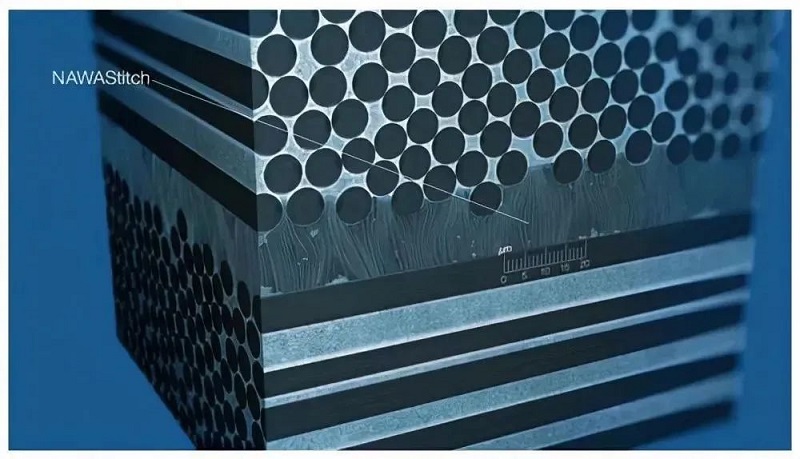
In recent years, the application of composite materials in airplanes has made rapid progress, with a wider range of applications and increasing usage. For example, the proportion of F35 is 35%, while large passenger planes represented by Boeing 787 and Airbus A350 have composite material usage accounting for 50% of the aircraft's structural weight. The entire fuselage and wing structure are almost entirely made of carbon fiber composite materials. The extensive use of carbon fiber composite materials is aimed at reducing the weight of aircraft structures and improving their reliability.
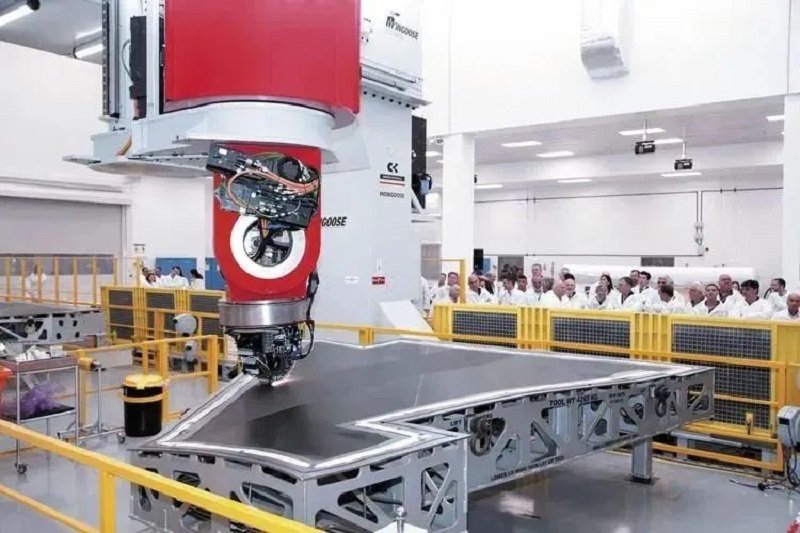
Aircraft extensively use composite materials, almost all of which are curved structures, while larger composite parts usually require integral molding. The traditional manual laying method in the past required multiple compaction to ensure the quality of the laying layer, which was difficult and had a low molding rate, making it difficult to guarantee product quality and no longer able to meet the needs of aircraft manufacturing.
Aircraft extensively use composite materials, almost all of which are curved structures, while larger composite parts usually require integral molding. The traditional manual laying method in the past required multiple compaction to ensure the quality of the laying layer, which was difficult and had a low molding rate, making it difficult to guarantee product quality and no longer able to meet the needs of aircraft manufacturing.
Previously, the technology of this high-end laying equipment was mastered by top manufacturing companies such as Electroimpact in the United States, Fives in France, and MTorres in Spain. It is gratifying that we have broken the foreign blockade and successfully developed a seven axis synchronous linkage gantry automatic wire laying machine, which can achieve continuity in the wire laying process. The maximum laying speed can reach 30m/min, and the machine has an X-axis stroke of 30m and a Y-axis stroke of 6.5m. It can efficiently lay up to 32 pre impregnated wire bundles, especially in terms of laying stability and accuracy, which is comparable to similar foreign products. Although it is still not comparable to the automatic wire laying machine with a laying speed of 50m/min in the United States, this is still a technological transformation from scratch in China. The corresponding domestic fiber laying software has also been successfully developed, providing strong technical support for the development of large aircraft in China.
The technological advantages are obvious:
Compared with manual laying, it greatly reduces costs and material waste rate. The cost of manual laying exceeds 25%, while using an automatic wire laying machine to complete the laying results in a waste rate of only 5%.
This technology greatly improves production efficiency and can reduce traditional manual layering labor by 40% to 90%.
Stable quality ensures the precision of the combination parts.
Automatic wire laying technology can not only be used in aircraft manufacturing, but also in other fields such as ships and wind power.
Next, we still need to continue to overcome difficulties and optimize the automatic wire laying machine. The initial mastery of this technology also proves that China is gradually breaking its dependence on Western high-end technology.
Information source: Machine Tool Magazine




