How can the equipment manufacturing industry embrace AI?
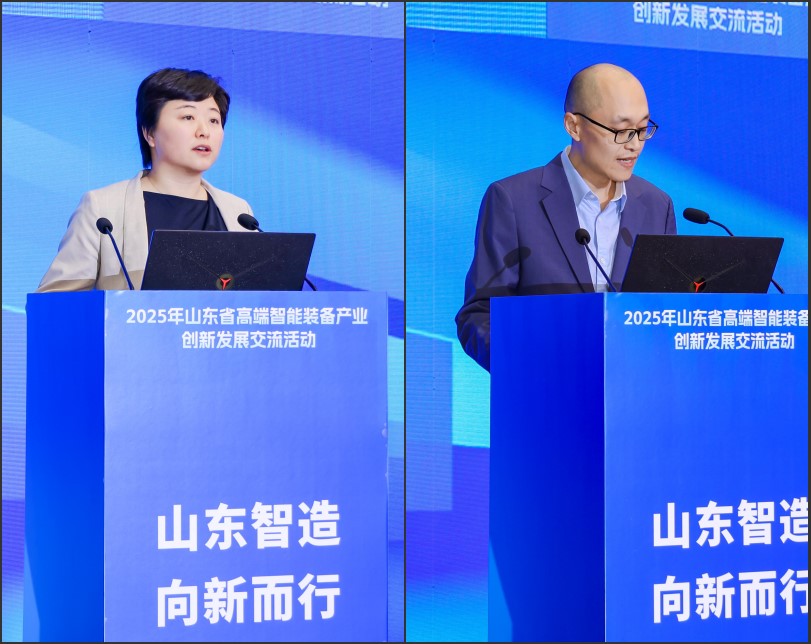
At the recently concluded "2025 Shandong Equipment Manufacturing Industry Science and Technology Innovation and Development Conference", the Shandong Equipment Manufacturing Industry Association called on industry enterprises in the province to actively embrace AI and leverage AI to achieve a magnificent transformation from "equipment manufacturing" to "equipment intelligent manufacturing" in the new wave of technological revolution and industrial transformation. As Dr. Guo Bin, co-founder and CTO of Austin, Texas, and expert in AI data center optimization, pointed out in the keynote speech of the conference, "AI is changing from 'usable' to 'affordable for everyone', and not embracing AI will be eliminated by intelligent manufacturing companies. ”When some companies are still discussing whether to adopt AI, the leaders have already internalized artificial intelligence as a production instinct. Empowering equipment manufacturing with AI is not just a simple technological upgrade, but a profound transformation involving data, processes, organization, and culture. Only by facing up to difficulties and accurately breaking through the situation can AI truly move from "looking good in the laboratory" to "solving problems on the production line", and ultimately achieve a qualitative leap from "manufacturing" to "intelligent manufacturing".
Why must equipment manufacturing companies embrace AI?
By 2024, the daily average number of devices in operation nationwide has increased from 1.37 million at the beginning of the year to nearly 3 million. Some advanced manufacturing enterprises in China are processing over 13TB of data per day, which is due to the real-time generation and processing of massive amounts of data. According to the White Paper on the Application and Development of Industrial Big Data in China (2023), the average daily production, quality inspection, equipment and other data generated by manufacturing enterprises in China has reached TB level, but the proportion actually used for business decision-making is less than 20%. A large amount of valuable data lies dormant deep within the system, forming a "redundant" and "fragmented" information island; The shortage of high-end skilled talents, time-consuming first article inspection, reliance on experience in drawing review, and frequent equipment failures continue to erode the profit margins and market response speed of enterprises - this is precisely the key to AI breaking through the situation. At the national level, a series of landmark documents such as the "Opinions on Deepening the Implementation of the 'Artificial Intelligence+' Action Plan" and the "Implementation Plan for the Digital Transformation of the Machinery Industry (2025-2030)" have been issued, indicating that AI is no longer an option, but a necessary choice for promoting new industrialization and achieving high-quality development.
The panoramic path of AI empowering manufacturing enterprises
To truly release the value of AI, we cannot stop at the application of single-point tools, but need to build an intelligent ecology covering the whole chain of "knowledge-process-post-system. This concept can be summarized as "four domain integration":
One is the intelligence of knowledge assets, allowing silent experiences to speak up.Equipment manufacturing enterprises have accumulated a massive amount of unstructured knowledge - equipment manuals, maintenance cases, process specifications, engineering drawings... These should be the core assets of the enterprise, but they are often scattered in personal computers or paper archives. AI, through natural language processing (NLP) and knowledge graph technology, can transform these "silent experiences" into retrievable, inferential, and generative intelligent knowledge bases. For example, after a certain heavy machinery group introduced AI knowledge assistants, maintenance engineers only need to ask "steps for disassembling and assembling electric spindles" through voice commands, and the system can accurately push relevant job specifications, historical maintenance records, and even video tutorials, reducing the average fault repair time by 40%. Furthermore, AI can intelligently analyze engineering drawings, automatically identify key dimensions, tolerances, and roughness parameters, and achieve intelligent labeling of bubble charts, greatly reducing manual input errors and time costs.The second is to intelligentize business processes and create a self driven collaboration engine.The traditional manufacturing process highly relies on manual coordination and paper-based approval, which is inefficient and prone to errors. The AI workflow engine can embed cross departmental and cross position business processes, such as new product trial production, supply chain collaboration, and quality traceability, into an automated closed loop. Taking first article inspection as an example, in the past, multiple parties including quality inspection, research and development, and production had to repeatedly verify the drawings and physical objects. Nowadays, through the AI driven "drawing table physical" linkage system, once there is a deviation in the parameters, the system can issue real-time warnings and automatically trigger the correction process. This' automatic collaboration 'not only improves accuracy, but also compresses the process cycle by more than 50%, truly achieving' process finding people 'rather than' people finding processes'.The third is the intelligentization of job skills, equipping each employee with an "AI avatar".The long training cycle and high cost of high-end skilled workers have become bottlenecks restricting the expansion of enterprises. The breakthrough of AI lies in its ability to "solidify" the experience of top experts into reusable intelligent assistants, known as "AI job clones". For example, in the component inspection process, newcomers can quickly determine the type of defect by overlaying AI visual recognition results with AR glasses; On the sales end, AI language assistants can recommend the best communication strategies in real-time based on customer industries and pain points; In research and development debugging, AI can recommend the optimal parameter combination based on historical data. This "human-machine collaboration" model not only reduces reliance on individual experience, but also significantly improves the overall human efficiency of the organization, achieving the goal of "retired masters without losing experience".The fourth is to connect the entire information system chain and end the era of "data silos".Local optimization will eventually encounter a ceiling. To maximize the value of AI, it must be deeply integrated with existing systems such as ERP, MES, CRM, etc., and extended to upstream suppliers and downstream customers to build an end-to-end intelligent business chain. For example, a certain rail transit equipment enterprise has established a unified data lake warehouse to comprehensively integrate design, procurement, production, and operation data. When a train experiences abnormal vibration during operation, the AI system can not only retrieve the design parameters, manufacturing batch, and installation records of the component, but also associate historical fault data of similar equipment, predict potential risks 7 days in advance, and automatically generate maintenance work orders and spare parts lists. This' full chain penetration management 'has shifted services from' passive response 'to' proactive prevention ', resulting in a significant increase in customer satisfaction.
What are the core challenges of AI enabled equipment manufacturing?
Although AI enabled equipment manufacturing has broad prospects, it still faces a series of structural, technical, and organizational core difficulties in the actual implementation process. If these difficulties cannot be effectively solved, they will seriously restrict the release of AI value. Based on the current industry situation and technological characteristics, the following five core challenges can be summarized:
One issue is severe data fragmentation and low data quality.The equipment comes from different manufacturers and systems (PLC, SCADA, MES, ERP) that are disconnected from each other, forming "information islands" that make it difficult to build a unified data view. The sensor accuracy is insufficient, the collection frequency is low, and the labels are missing or incorrect, resulting in "garbage in and garbage out"; Engineering drawings, maintenance logs, operation manuals, etc. exist in PDF, image, and handwritten text forms, which traditional systems cannot effectively parse, and unstructured data accounts for a high proportion. For example, a machine tool company attempted to use AI to predict spindle faults, but found that the sampling rate of historical vibration data was inconsistent, and 80% of the fault records were not labeled with specific failure modes, causing difficulties in model training.The second challenge is the difficulty of adapting to different scenarios, and the general AI model is not adapted to the local environment.The industrial scene is highly specialized. AI is good at recommendation, dialogue and other tasks in the consumer Internet, which is essentially different from the high-precision, strong real-time, strict safety requirements of the manufacturing site; The problem of small sample size is prominent, and scenario data such as key equipment failures and high-end process parameters are scarce, making it difficult to support large-scale model training; The concept of 'black box' is unacceptable, as manufacturing companies require interpretable decisions and traceable processes. However, the lack of interpretability in deep learning models often leads to a crisis of trust. For example, although the Large Language Model (LLM) can generate reports, it cannot directly control CNC machine tools; The visual inspection model achieved an accuracy rate of 99% in the laboratory, but dropped sharply to 85% under changes in workshop lighting and oil pollution interference.Thirdly, the integration of technology is complex, and the integration of AI and OT/IT systems is difficult.OT (Operations Technology) and IT (Information Technology) languages are not compatible. Automation engineers focus on real-time and stability, while IT personnel focus on scalability and security, resulting in high collaboration costs for both parties; The edge cloud collaborative architecture is not yet mature, and some AI inference needs to be completed on the device side (edge) to meet low latency, but model updates and data feedback rely on the cloud, making the architecture design complex. For example, different AI platforms and industrial protocols (such as Modbus, OPC UA) have poor compatibility, long integration development cycles, and high costs.The fourth issue is the gap between organization and talent, where 'there is technology but no implementation'.The business department is disconnected from the technical team, and frontline workers and process engineers do not understand what AI can do. The AI team also does not understand manufacturing logic, resulting in projects being "just talk on paper"; Composite talents are extremely scarce, with very few "bridge type" talents who understand both mechanical/electrical/process and master AI modeling and data engineering; AI may change existing workflows and even job settings, causing employee resistance and a lack of effective change management mechanisms, resulting in significant resistance to change. For example, companies spend a lot of money deploying AI quality inspection systems, but due to the lack of supporting adjustments to the performance evaluation of quality inspectors, the manual re inspection rate remains high, and the ROI (return on investment) is far lower than expected.The fifth issue is the uncertainty of input-output, difficulty in calculating ROI, and lack of confidence in sustained investment.High initial investment, including hardware (edge servers, sensors), software (AI platforms, annotation tools), and manpower (algorithm engineers, data annotators); The efficiency and quality improvements brought by AI are often scattered across multiple stages, making it difficult to attribute and quantify them separately, and the value is slow to manifest; Small and medium-sized enterprises have a strong wait-and-see attitude, worried about "paying tuition fees" but unable to see practical results, lacking a successful paradigm.
Therefore, we must have a clear understanding of its boundaries and challenges:One is to be wary of the "LLM omnipotence theory".The big language model excels in information processing and decision support, but cannot directly perform physical operations, ensure absolute accuracy, or meet millisecond level responses. It is feasible to use it for predictive maintenance, but specialized algorithms are required for real-time control of machine tools.The second is to prevent the "token cost black hole".If complex tasks frequently call large models, the inference cost may skyrocket exponentially. The architecture needs to be optimized through model distillation, local deployment, task decomposition, and other methods.Thirdly, we must adhere to the bottom line of data security.Sensitive data such as core process parameters and customer information must be ensured to be 'usable but invisible' through technologies such as trusted data space and privacy computing.
Transitioning from 'technology driven' to 'value driven'
To overcome the above difficulties, a systematic strategy needs to be adopted: firstly, starting from high-value scenarios, prioritizing the selection of links with high downtime losses, high labor costs, and significant quality fluctuations (such as predictive maintenance and intelligent quality inspection). The second is to build a "lightweight+modular" AI architecture, avoiding "big and comprehensive", and adopting microservices and low code platforms for rapid verification. The third is to promote "data governance first" and establish a unified data standard, metadata management, and quality monitoring mechanism. The fourth is to cultivate internal AI capabilities: bridging the cognitive gap through "AI+process" joint groups, digital training, and other methods. The fifth is to explore the "AIaaS" model, leveraging cloud vendors or vertical domain solution providers to lower the threshold.
AI is not a replacement for humans, but a 'partner' that enhances human capabilities. In the intelligent journey of equipment manufacturing industry, the real winners will be those enterprises that dare to break inertia, strategically layout AI, and adhere to people-oriented principles. Decisions require data, actions require responsibility. The future is here, only change will not break. When the computing power of AI is deeply integrated with human creativity, when silent knowledge is awakened, fragmented processes are stitched together, and scarce skills are amplified, Chinese manufacturing will inevitably usher in its own "second growth curve": a high-quality development path driven by intelligence and defined by value.
Article: Guo Guangli Compiles Expert Reports