

The change in expression from "digitalization" to "digitization" has profound implications
Promoting the digital transformation of the manufacturing industry, advancing the digital transformation of the service industry, advancing the upgrading and digital transformation of traditional infrastructure, empowering cultural construction with digital technology, and promoting the digital construction of national health. After carefully reading the recommendations of the 15th Five Year Plan, we have repeatedly mentioned the concept of "digital transformation".
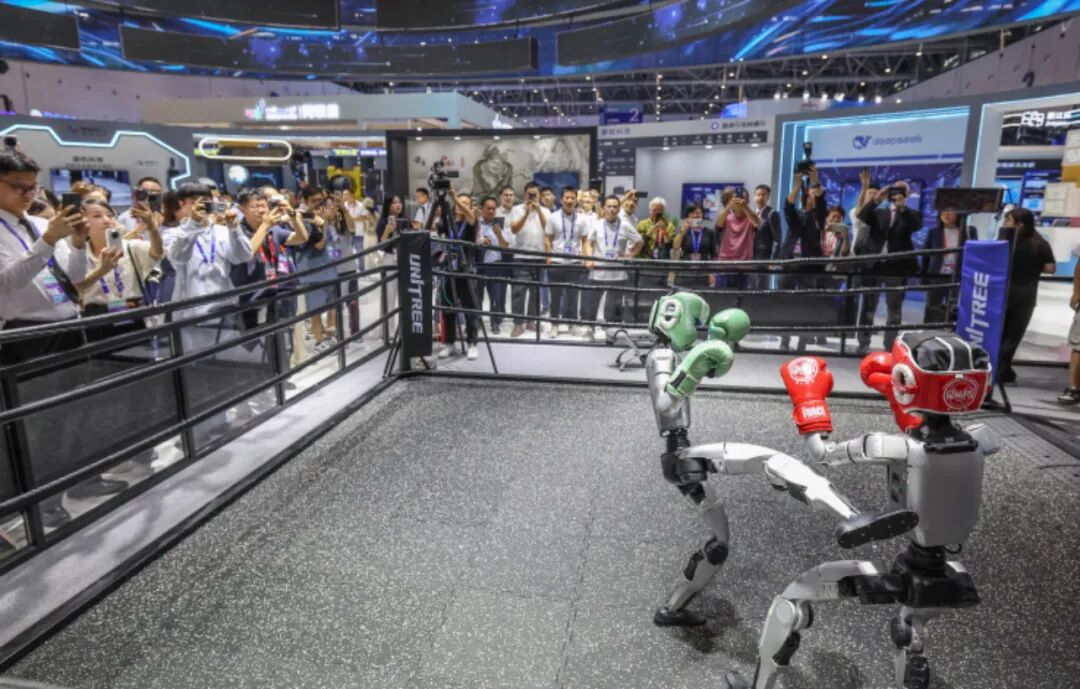
In the Hangzhou Six Little Dragons section of the Digital Intelligence Future theme exhibition area of the fourth Global Digital Trade Expo, the humanoid robot of Yushu Technology is engaged in a fight arena competition. Photo by Xinhua News Agency reporter Xu Yu
What is the profound meaning behind the transformation from "digitalization" to "digitization"?
Digital transformation refers to the process of using digital technology to transform, upgrade, and reshape the value of various links in the real economy industry chain and supply chain.
Digitization is the fusion of digitization and intelligence. Digital transformation refers to the introduction of intelligent technologies such as self-learning, decision optimization, predictive analysis, etc. on the basis of digital transformation, in order to improve production efficiency, optimize resource allocation, enhance management level, and strengthen innovation capabilities.
Taking a large chain supermarket as an example——
Digitization "requires real-time collection and traceability of procurement, warehousing, sales, and other data, which can be used as a basis for data analysis and marketing decision-making afterwards.
To achieve digitalization, it is necessary to develop an intelligent system that can automatically adjust prices and formulate sales strategies based on factors such as inventory levels and product shelf life. The system should also be able to effectively predict product demand based on temperature changes, holidays, and other factors, and automatically generate purchase orders. In addition, the system can also provide personalized product recommendations based on consumers' historical orders.
From "digitalization" to "digitization" is an inevitable requirement to adapt to technological progress.
As another epoch-making revolutionary technology following the steam engine, electricity and the Internet, AI is driving the economic and social development to a new stage of intelligence with unprecedented speed, breadth and depth.
For example, in synthetic biology factories, using artificial intelligence algorithms to drive production can optimize fermentation processes for hundreds of millions of bacteria 24 hours a day, increasing efficiency tenfold; In the research and development workshop of high-speed trains, simulation models can shorten the aerodynamic calculation efficiency from one day to 10 seconds.
The proposal for the 15th Five Year Plan emphasizes the transformation towards "digitalization", reflecting China's determination to firmly grasp the opportunities of artificial intelligence, systematically promote innovation and empower applications in the artificial intelligence industry.
We have a solid foundation from 'digitalization' to 'digitization'.
In recent years, China's artificial intelligence industry has flourished and its overall strength ranks among the top in the world. According to the China Academy of Information and Communications Technology, by 2024, the scale of China's core artificial intelligence industry will exceed 900 billion yuan, with over 5000 artificial intelligence enterprises and over 400 national level "little giant" enterprises specializing in artificial intelligence.
The foundation of computing power is becoming increasingly solid. Domestic enterprises have released multiple artificial intelligence chip products, and "China Chip" has achieved phased breakthroughs in architecture innovation, ecological reconstruction, and other aspects. The scale and level of computing infrastructure continue to improve. As of the end of June this year, the total scale of computing center racks in use in China reached 10.85 million standard racks, and the scale of intelligent computing power reached 78.8 trillion times per second.
A variety of algorithm models are blooming, and as of the end of June this year, 1509 large models have been released. A group of competitive general large models continue to emerge, and domestic large models such as Deep Search and Tongyi Qianwen lead the global open source innovation ecosystem.
From "digitalization" to "digitization", we need to promote the integration of artificial intelligence into various industries and provide strong momentum for high-quality development.
The development of artificial intelligence relies heavily on applications. Over the past 60 years, artificial intelligence has gone through several rounds of ups and downs, all of which have emerged from technological breakthroughs and declined from the trend of "moving away from reality and towards virtuality". The current wave of artificial intelligence led by large-scale models is still in its infancy, and whether it can deeply integrate with the real economy, especially with the manufacturing industry, is the key to success or failure. This requires us to deeply implement the "Artificial Intelligence+" action, focus on technology supply on one hand, and promote the "intelligent industrialization"; One end focuses on empowering applications and accelerating "industrial intelligence"; Promote the high-quality development of the artificial intelligence industry, and empower economic and social development in all aspects, at a deep level, and at a high level.
From "digitalization" to "digitization", a change of one word, drawing a new blueprint. Facing the future and anchoring the goal, let's give full play to the "multiplier" effect of AI technology and build a strong material and technological foundation for Chinese path to modernization.
Source: People's Daily Economic and Social WeChat official account




