

The popularization of 'unmanned' technology will accelerate the development of the robotics industry
With the emergence of "unmanned supermarkets," "unmanned hotels," "unmanned driving," etc., "unmanned" is no longer a concept, but is being integrated into human life. Accompanying this is people's contemplation: Will robots really replace humans in the future? In June 2018, Foxconn Chairman Terry Gou publicly stated, "We decided 10 years ago to replace human labor with robots. Our internal plan is to eliminate these workers within 5 years. Our goal is to eliminate 80% of them. If we can't do it within 5 years, we will do it within 10 years
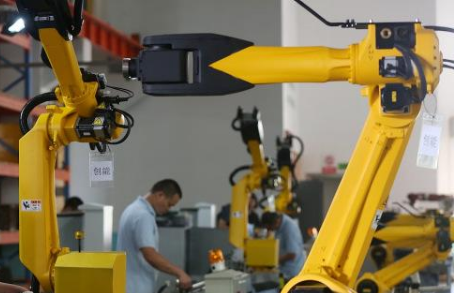
This means that if nothing unexpected happens, nearly one million employees of Foxconn, which used to recruit in large quantities, will be eliminated in the future. On the other hand, as a labor-intensive enterprise, Hella Electronics has added more than 200 ABB robots so far. The remote control car key production line, which used to require 30 workers, has now been replaced by 11 robots without direct operators. The production cycle time has reached 5.5 seconds, which is more than twice as fast as manual production.
All of this seems to remind us that robots are not far away from replacing humans!
However, when it comes to the topic of machines replacing humans, Jack Ma's viewpoint is very profound: "What determines the future of the world is not technology, but the people behind technology, the ideals, dreams, and value systems behind technology. Humans cannot be completely replaced by machines. Humans have creativity and thinking ability, while machines do not. No matter how powerful machines are, they cannot create words
Unmanned does not mean that robots and humans compete for jobs, but rather that robots replace humans to complete tasks that are not suitable for humans. Robots can replace humans in hazardous environments and complete repetitive and tedious assembly line work, freeing humans from dangerous and repetitive tasks and enabling remote monitoring and operation of robots.
Correspondingly, as humans lose some 'rice bowls', new ones will also emerge. Just as the replacement of horse drawn carriages by cars has given rise to a number of new positions related to automobiles, the future of human-machine integration work scenarios will also generate a large number of emerging talents. Robots are constantly advancing, and with the advancement of technology, the accuracy of industrial robots is constantly improving, which can be applied to more industries and complete more advanced tasks.
However, industrial robots always require human operation, maintenance, and upkeep. Only by collaborating with humans and machines can we create higher work efficiency for enterprises. The operation, control, and maintenance of all robots require more professional technicians, rather than ordinary workers.
Information source: Jinshixing Robotics College




